
Working as an escort in London isn’t just about showing up and smiling. It’s a high-stakes job where your safety, reputation, and peace of mind depend on the choices you make every single day. The city moves fast, clients come from everywhere, and not everyone has good intentions. If you’re new to this world-or even if you’ve been doing it for a while-there are hard truths you need to know before you step out the door.
Know Your Legal Boundaries
In London, prostitution itself isn’t illegal, but almost everything around it is. Soliciting in public, kerb crawling, running a brothel, or advertising sexual services online can land you in serious legal trouble. The law doesn’t protect you if you break these rules. That means no public pick-ups, no ads that say "sexual services," and no sharing a space with other workers unless you’re absolutely certain it’s safe and legal.
Many escorts use private apartments or short-term rentals under the guise of "companion services." That’s fine-if you control the environment. But if you’re being pressured to work in someone else’s space, or if the landlord knows what’s going on and hasn’t signed a proper contract, you’re at risk. Always have a written agreement, even if it’s just a simple note confirming the time, location, and service agreed upon. It’s not about trust. It’s about paper.
Screen Clients Like a Pro
Not every client is dangerous. But one bad one can change your life forever. Screening isn’t optional-it’s your first line of defense.
Start with the basics: ask for full name, phone number, and proof of ID. Don’t accept a fake name or a burner phone. Use a reverse lookup tool to check the number. If the number shows up on public forums linked to scams, walk away. Look for consistent details across their profile-if they claim to be a lawyer from Canary Wharf but their LinkedIn is empty or full of stock photos, that’s a red flag.
Ask questions during the booking call. "What brings you here today?" "Do you have any specific boundaries?" Listen for hesitation, defensiveness, or overly vague answers. A real client will be clear, respectful, and calm. A predator will try to rush you, test your limits, or act overly charming to lower your guard.
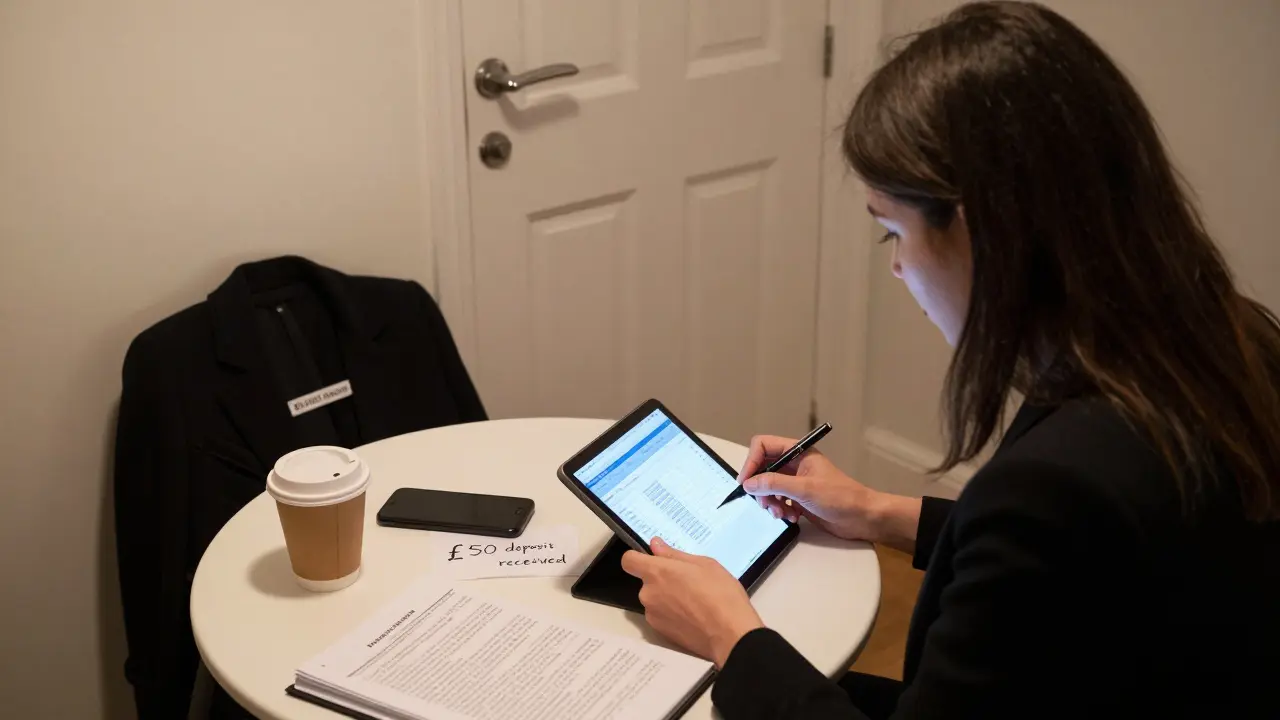
Always require a deposit. Not just any deposit-something that proves they’re serious. A non-refundable £50 upfront via bank transfer (not PayPal or cash) is standard. If they argue, refuse, or try to pay in gift cards? That’s a warning sign. Real clients don’t mind paying to secure a time slot.
Control the Environment
Your space is your sanctuary. Never go to a client’s home unless you’ve vetted it thoroughly. Even then, bring a friend-or at least a trusted colleague who knows where you are and when to check in.
Use apps like SafeRide is a safety app designed for independent workers that lets you share your live location with trusted contacts. Set a timer. If you don’t check in by a certain time, it automatically alerts your emergency contact. You can also use a dummy phone with a fake number to make it look like you’re on a call while you’re actually alone.
Keep your bag near the door. Always. Never let your coat, phone, or wallet out of your sight. If a client tries to move you to a different room, say no. If they turn off the lights, say no. If they try to lock a door behind you, say no. You have the right to leave at any time-no explanation needed.
Build a Support Network
You don’t have to do this alone. There are groups in London specifically for independent escorts who want to stay safe. Organizations like The English Collective of Prostitutes is a long-standing advocacy group offering legal advice, peer support, and safe space referrals provide resources you won’t find anywhere else.
Join their private WhatsApp group. Read their weekly safety bulletins. Attend their monthly meetups-even if it’s just to listen. You’ll hear real stories: how someone spotted a known stalker, how a worker used a panic word to get out of a bad situation, how a client was reported to police after making threats.
Don’t isolate yourself. Even if you work solo, you need someone who knows your routine. A friend who texts you "how’s it going?" at 8 PM. A colleague who covers for you if you’re late. A lawyer who’s on speed dial. These aren’t luxuries. They’re survival tools.
Protect Your Digital Footprint
Google yourself. Right now. See what comes up. If your real name, address, or phone number shows up on any site-even an old forum post-you’re at risk. Clients can-and do-use this information to harass, stalk, or blackmail.
Use a separate email for work. Never link it to your personal accounts. Set up a virtual phone number through a service like Google Voice or Burner to handle client calls. Never use your real number. Delete old ads. If you posted on Backpage before it shut down, your info is still out there. Use a data removal service to request deletion from public archives.
Turn off location tagging on all social media. No check-ins. No "just finished a great night out!" posts. Even if you’re careful, someone might tag you. A photo of you at a café with a client in the background? That’s enough for a stalker to triangulate your routine.

Trust Your Gut-Always
The most important tool you have isn’t an app, a lawyer, or a safety checklist. It’s your gut. If something feels off, it is. If a client makes you uncomfortable-even if they’re polite, rich, or charming-you don’t owe them anything. Walk out. Cancel the appointment. Block the number. Report the incident.
There’s no shame in saying no. No one will think less of you for prioritizing your safety. In fact, the most successful escorts in London are the ones who say no more often than yes. They don’t chase every booking. They don’t take risks for extra cash. They build long-term reputations based on reliability, boundaries, and self-respect.
What to Do If Something Goes Wrong
Even with all the precautions, things can still go sideways. If you’re threatened, harassed, or assaulted:
- Call the police. You have rights. You are not a criminal for being an escort.
- Document everything: time, location, description, what was said, what happened. Take screenshots.
- Reach out to The English Collective of Prostitutes or The Lucy Project offers crisis support and legal aid specifically for sex workers in London. They’ve helped dozens of workers navigate police reports, restraining orders, and court cases.
- Change your routines. Switch your phone, your meeting spots, your schedule. Predators look for patterns.
You are not alone. Thousands of women and non-binary people work in this industry in London. Most of them stay safe because they’re smart, prepared, and connected. You can too.
Is it legal to work as an escort in London?
Yes, selling sexual services is not illegal in the UK. However, related activities like soliciting in public, running a brothel, or advertising sexual services online are against the law. Many escorts operate legally by offering companionship services in private, controlled environments with clear boundaries and written agreements.
How do I screen clients safely?
Always require full identification, a verified phone number, and a non-refundable deposit. Use reverse lookup tools to check numbers. Ask open-ended questions during the booking call. Watch for hesitation, pressure, or overly vague answers. Never accept cash-only payments or last-minute changes without verification.
Should I ever go to a client’s home?
It’s possible-but only if you’ve thoroughly vetted the location and the person. Never go alone. Always have someone who knows your location and expected return time. Use a safety app to share live location. Trust your instincts-if it feels risky, say no. Your safety is more important than any payment.
What apps or tools help escorts stay safe?
Apps like SafeRide, Google Voice, and Burner help protect your identity and location. Use SafeRide to share live location with trusted contacts. Use Google Voice or Burner for a separate work number. Set up automatic check-in timers. Keep your personal phone and social media separate from your work life.
Where can I get help if I’m in danger?
Contact The English Collective of Prostitutes or The Lucy Project. Both offer free legal advice, crisis support, and safe space referrals. You can also call the police-your rights are protected under UK law. Don’t suffer in silence. Help is available, and you deserve to be safe.